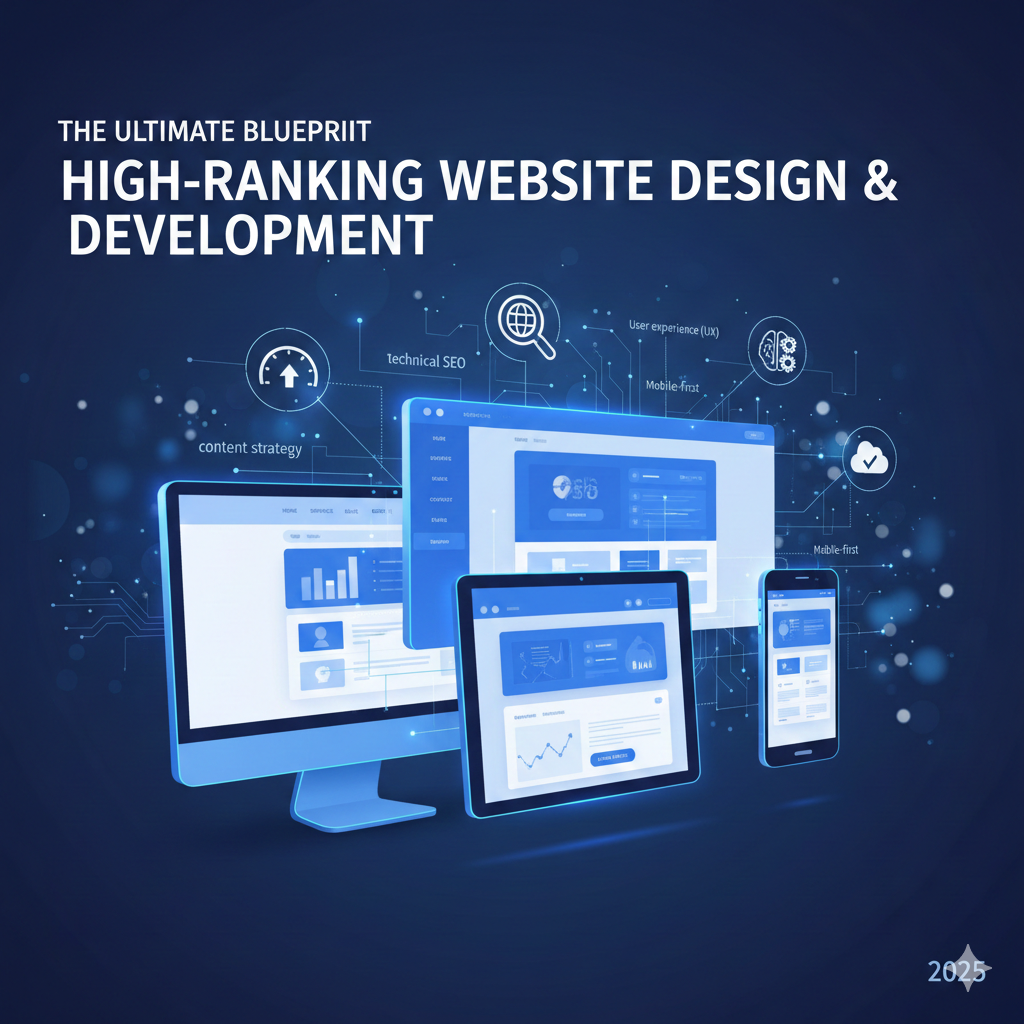
The digital landscape is constantly evolving, making the strategic approach to website design and development more critical than ever before. A modern website is no longer just an online brochure; it is a powerful sales tool, a lead generation engine, and the core of your digital identity. For businesses aiming for high search engine rankings and genuine user engagement, fusing aesthetic design with technical excellence is non-negotiable.
This article outlines the essential pillars of modern SEO-friendly website design and development that will secure your position at the top of search results and drive tangible business growth.
Pillar 1: User Experience (UX) and Responsive Design
Search engines, particularly Google, prioritize websites that offer exceptional user experiences. The time a visitor spends on your site, how quickly they find information, and whether they can access it on any device are now crucial ranking signals.
Mobile-First Approach: Beyond Responsiveness
While responsiveness—where a site adjusts to screen size—is mandatory, a mobile-first approach means designing for the smallest screen first, then scaling up. This is critical because the majority of web traffic now originates from mobile devices.
-
Design for Thumb Reach: Ensure key navigation and Call-to-Action (CTA) elements are easily accessible for users holding their phone one-handed.
-
Prioritize Content: Display the most vital information immediately. Desktop design often allows for more complexity; mobile requires brutal prioritization.
-
Testing: Use tools like Google’s Mobile-Friendly Test to ensure seamless functionality across all device types.
The Importance of Intuitive Navigation
A clean user experience (UX) requires intuitive navigation. A visitor should never be more than two or three clicks away from the information they seek.
-
Logical Site Architecture: Structure your content hierarchically, linking related pages clearly. This helps both users and search engine crawlers understand the relationship between different topics on your site.
-
Clear CTAs: Use descriptive, action-oriented text for buttons. Confusing links or hidden CTAs lead to high bounce rates, signaling poor quality to search engines.
Pillar 2: Technical Excellence and Page Speed Optimization
Development quality directly impacts performance, which is a core technical SEO factor. A beautifully designed site that loads slowly will lose traffic and sales.
Mastering Core Web Vitals (CWV)
Google’s Core Web Vitals measure the real-world user experience of loading speed, interactivity, and visual stability. Optimizing these factors is vital for achieving a high-ranking position.
To improve these metrics, prioritize the following:
-
Image Optimization: Compress images without sacrificing quality and leverage modern formats like WebP. Use lazy loading for images below the fold.
-
Minify Code: Reduce CSS, JavaScript, and HTML file sizes by removing unnecessary characters.
-
Leverage Browser Caching: Allow returning users to load your site faster by storing certain assets locally.
If you require expert assistance in optimizing your infrastructure for maximum performance and technical SEO, partnering with a dedicated web development agency can provide significant competitive advantage. For comprehensive solutions, consider reaching out to the experts at Digital Web Core.
Pillar 3: Content Strategy and Internal Linking
Even the fastest website with the best UX requires valuable content to rank. The strategy involves not just writing, but also organizing content for both the reader and the search bot.
High-Value Keyword Integration
Your website design must be built around targeted content. Effective keyword research is the foundation of this process.
-
Target Search Intent: Ensure your blog post, service page, or landing page truly answers the user’s query. An informational query (e.g., how to build a website) needs a different approach than a transactional query (e.g., custom website design).
-
Semantic SEO: Include related phrases (LSI keywords) naturally within the text. If your primary keyword is “web design services,” use terms like “professional website design,” “UX optimization,” and “digital presence” throughout the article.
Strategic Internal Linking
Internal linking is the practice of hyperlinking one page on your site to another. This is crucial for distributing “link equity” (ranking power) across your site and guiding users to relevant information.
-
Descriptive Anchor Text: Always use anchor text that clearly describes the page being linked to. Avoid generic terms like “click here.” For example, instead of a generic link, you can use anchor text like professional website design to link to services offered by Digital Web Core.
-
Depth and Relevance: Link from high-authority pages to new or important pages. The links must be topically relevant to provide value to the user. This strategy helps search engines understand the priority of your content.
Conclusion: Building for Tomorrow’s Web
Successful web design and development in the modern era demands a holistic approach that seamlessly integrates design aesthetics with robust engineering and proactive SEO strategy. From the technical infrastructure underpinning your site to the carefully crafted user journeys and content architecture, every detail contributes to your final ranking.
If your business needs a compelling, high-performing digital platform that acts as a true growth driver, investing in custom website design services is the key to unlocking competitive organic traffic. Get started on building your next-generation website today by exploring the solutions offered at Digital Web Core.